
Jacketed bag filter housings
A bag filter body with a jacket for temperature management alongside particle filtration.
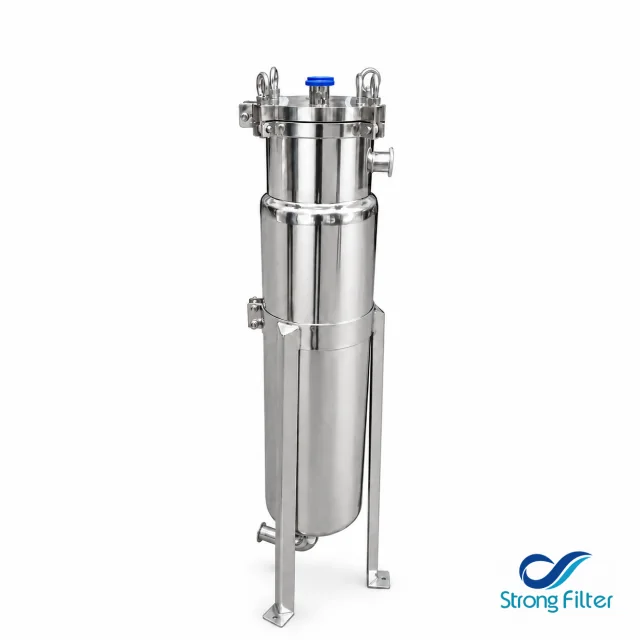 BVJ
AI-enhanced reference views of similar equipment. Actual configuration follows the agreed specification.
Product overview
A bag filter body with a jacket for temperature management alongside particle filtration.
- Series
- BVJ
- Selection priorities
- Duty, filtration elements, dimensions, materials, interfaces and service conditions
Working principle
The element retains particles while the jacket medium manages temperature. Each side has its own fluid and design conditions.
Construction & flow path
A jacket surrounds the bag housing: the bag retains particles and jacket fluid manages temperature. The bag-ring seal still requires its own fit review.
Applications & filtration duty
For viscous-liquid duties requiring heat retention or temperature management. The jacket does not replace bag compatibility and temperature checks.
Technical parameters
Use these specifications for selection. Materials, dimensions and operating conditions follow the selected model and agreed specification.
Selection information
- Operating flow (m³/h)
- Operating / design temperature (°C)
- Filtration rating (μm)
- Differential pressure & service trigger (MPa)
- Dimensions & service clearance (mm)
Model and configuration notes
Configuration for your applicationShare the fluid, filtration goal, operating conditions and installation requirements. Existing models, nameplates or drawings help us review the configuration.
Nozzle layout reference 1–15
Compare inlet and outlet directions to plan the connection to your pipework.
Opposite sides · level
Side in · bottom out
Side in · right elbow
Twin bottom ports
Bottom in · upper right
Opposite sides · high to low
Bottom in · upper left
Same side · high to low
Top in · bottom out
Top in · left elbow
Top in · lower right
Side in · return pipe
With return pipeOutlet defined by designRight in · bottom out
With return pipeSide in · lower left
With return pipeSide in · left elbow
With return pipe
Information to prepare for an inquiry
Use this family’s selection priorities to share available operating conditions, equipment information or drawings.
- Provide process viscosity and required temperature.
- Review jacket medium and both sides' conditions separately.
- Match bag temperature conditions, seals and jacket connections.
Operation & maintenance
Before opening, replacing elements or disassembly, stop and isolate under the equipment procedure, depressurize, drain and confirm zero pressure. Manage residual pressure and temperature on both sides before changes. Inspect jacket ports and bag seals and plan for liquids that solidify on cooling.
Common operating inputs
- Fluid and major composition
- Target flow and operating pattern
- Operating temperature and pressure
- Contaminant form and target rating
- Material, connection and space constraints
- Maintenance frequency and existing equipment
Discuss this product’s configuration
Share the fluid, operating and installation conditions to review suitable specifications.
Products can be configured around the actual duty. Final specifications follow the quotation, drawing or technical agreement confirmed by both parties.
Related products
BV Flat-cover Single-bag Filter Housing
A straightforward flat-cover, multi-bolt construction for single-bag filtration with a clear operating sequence and layout choices.
Learn moreCBV Concave-cover Single-bag Filter Housing
The concave cover helps liquid settle back during opening, supporting a cleaner and more comfortable bag-change routine.
Learn moreTBV Convex-cover Single-bag Filter Housing
The convex cover provides another flow and opening arrangement for a single-bag housing, helping the design follow site pipework.
Learn more