
PP Membrane Pleated Filter Cartridge
The pleated construction provides a larger effective filtration area for liquid duties that balance throughput and particle capture.
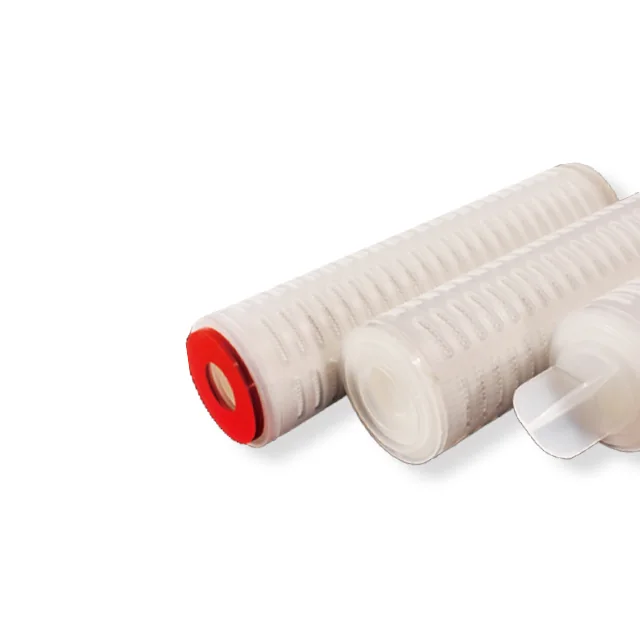 PPT
The gallery shows different views and construction details from this series.
Product overview
A polypropylene membrane pleated cartridge offered in multiple ratings, lengths, end fittings and seals.
The pleated construction provides a larger effective filtration area for liquid duties that balance throughput and particle capture.
- Series
- PPT
- Selection priorities
- Media, rating basis, length, end fitting, seal, differential pressure and replacement conditions
Working principle
PPT retains particles using pleated PP microporous media, organizing filtration area within the element envelope.
Construction & flow path
Match the PP medium, support, ends and seals to the mounting seat, interface and actual membrane construction.
Applications & filtration duty
For particle prefiltration or process-liquid filtration. Micropores and micron figures alone do not establish sterilization, dissolved-substance removal or ultrapure performance.
Technical parameters
Use these specifications for selection. Materials, dimensions and operating conditions follow the selected model and agreed specification.
Materials & construction
- Filter media
Polypropylene microporous membrane
- Construction & fabrication
Pleated microporous-membrane construction.
- Seal-material codes
S=silicone; V=fluoroelastomer; VT=PTFE-encapsulated; R=EPDM; Z=NBR
Filtration specifications
- Filtration ratings
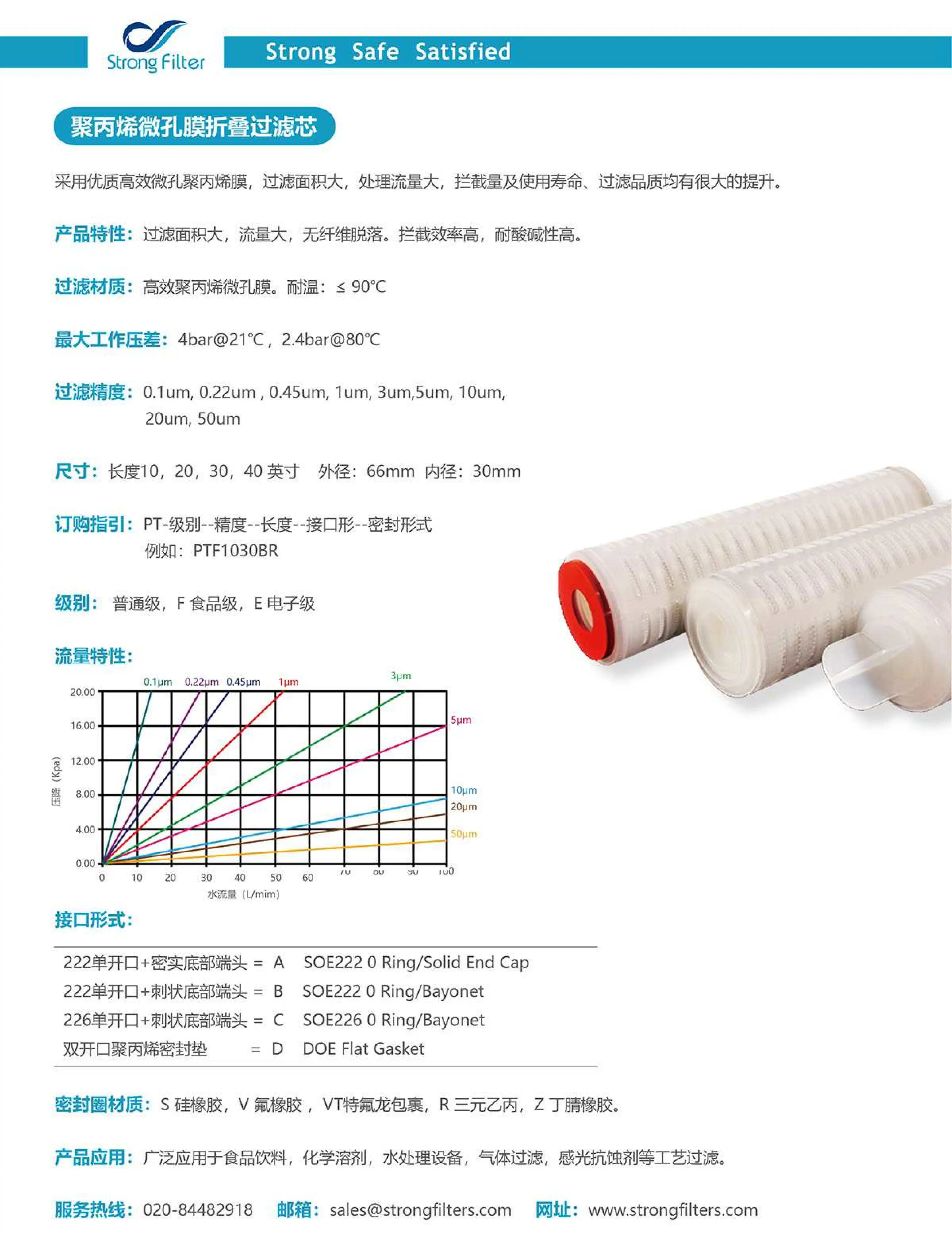
0.1 / 0.22 / 0.45 / 1 / 3 / 5 / 10 / 20 / 50 μm
- Nominal length
10 / 20 / 30 / 40 in
- Outside diameter
66 mm
- Inside diameter
30 mm
Operation & maintenance
- Operating temperature
≤90 °C
- Maximum element differential pressure
4 bar at 21 °C; 2.4 bar at 80 °C
Connections & installation
- End-fitting codes
A=222 single-open-end with solid end cap; B=222 single-open-end with spear end; C=226 single-open-end with spear end; D=double-open-end with PP gasket
Configuration & supply scope
- Application codes
Blank = general-use code; F = food-use code; E = electronics-use code. Review materials, tests and supporting documents for the project requirements.
Model and configuration notes
PT + application grade + rating + length + end fitting + sealThe ordering prefix for PPT polypropylene pleated cartridges is PT. Check application, rating, length, end fitting and seal for the selected model.
View the product sheetReview specifications, ordering options and construction diagrams for your application.
Information to prepare for an inquiry
Use this family’s selection priorities to share available operating conditions, equipment information or drawings.
- Define target particles and nominal/absolute rating needs.
- Check compatibility of PP, ends and seals.
- Provide flow, viscosity, count and acceptable pressure loss.
Operation & maintenance
Replace based on pressure drop and treated-liquid quality. Inspect pleats and end seals and confirm the method before any cleaning.
Common operating inputs
- Fluid and major composition
- Target flow and operating pattern
- Operating temperature and pressure
- Contaminant form and target rating
- Material, connection and space constraints
- Maintenance frequency and existing equipment
Discuss this product’s configuration
Share the fluid, operating and installation conditions to review suitable specifications.
Products can be configured around the actual duty. Final specifications follow the quotation, drawing or technical agreement confirmed by both parties.
Related products
PEST PES Membrane Pleated Filter Cartridge
A thermally bonded construction minimizes added adhesive, while the pleated format balances filtration area and dirt-holding space.
Learn moreNYT Nylon Pleated Filter Cartridge
Naturally hydrophilic nylon media wets readily and can be matched with rating and seal choices around the fluid.
Learn morePTFET PTFE Membrane Filter Cartridge
Hydrophilic and hydrophobic media directions make it easier to match the cartridge to the fluid’s wetting behavior.
Learn more