
CW Cotton String-wound Filter Cartridge
The wound construction creates a depth-filtration path from outside to inside for liquids with a broad particle distribution.
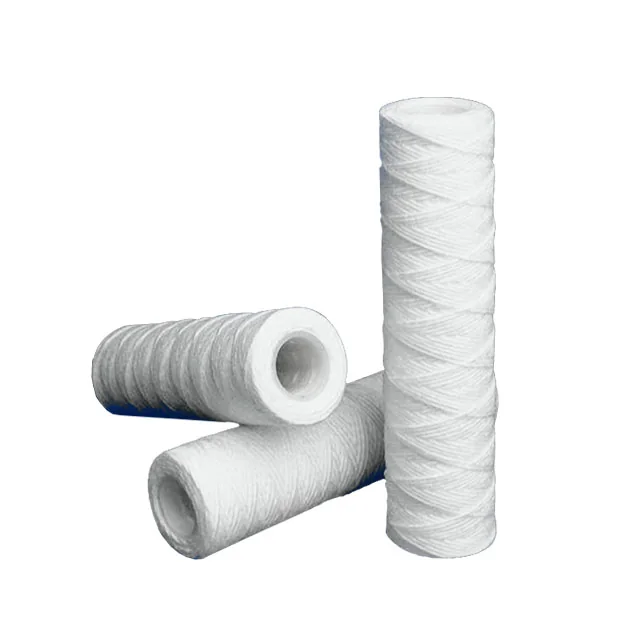 CW
The gallery shows different views and construction details from this series.
Product overview
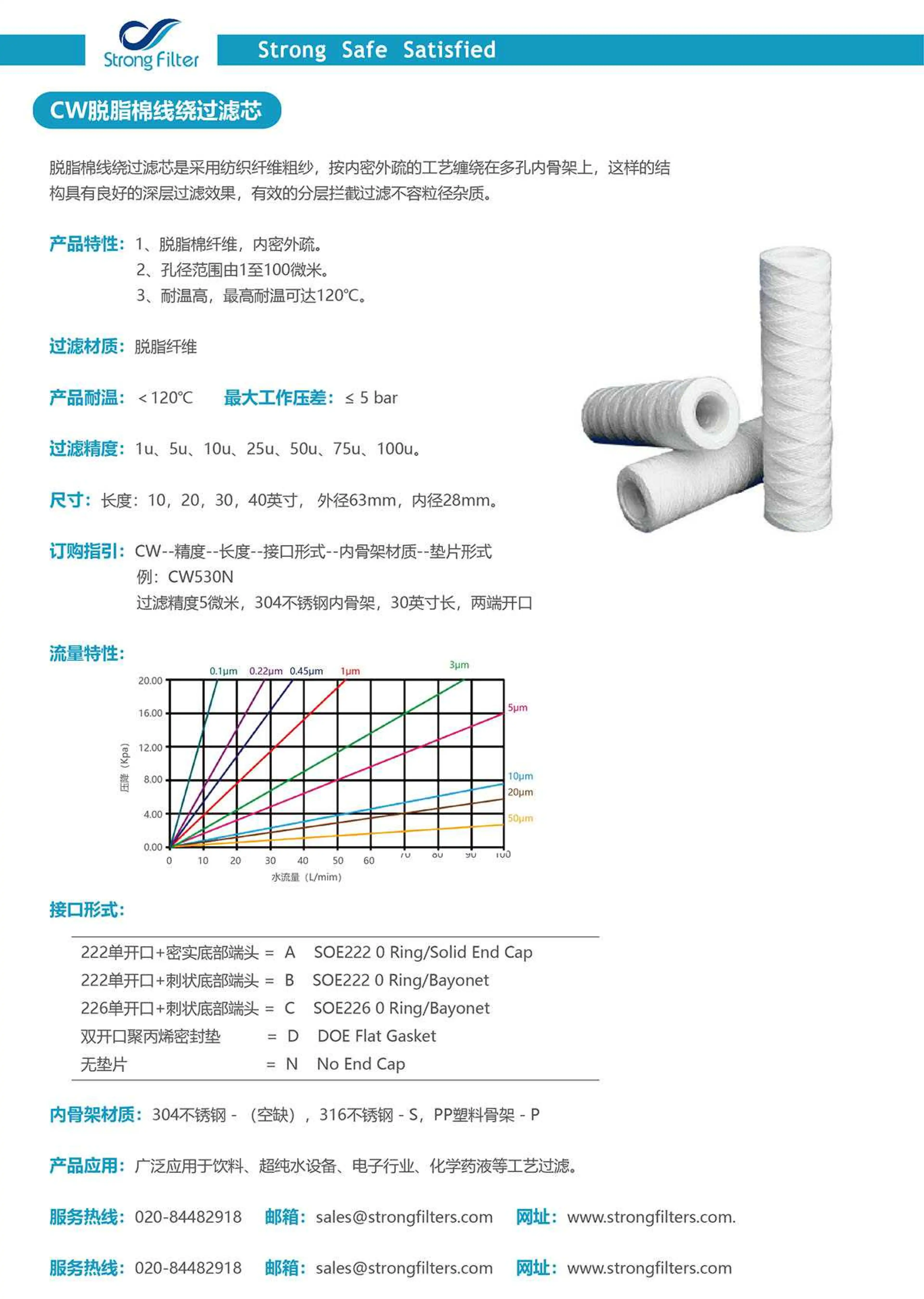
The CW degreased-cotton string-wound cartridge can be configured by rating, length, end fitting, core and seal.
The wound construction creates a depth-filtration path from outside to inside for liquids with a broad particle distribution.
- Series
- CW
- Selection priorities
- Media, rating basis, length, end fitting, seal, differential pressure and replacement conditions
Working principle
CW forms depth paths using degreased cotton yarn wound around a core, retaining particles as liquid passes through the yarn structure.
Construction & flow path
Cotton media and the inner core form the element. Core material, ends and seals must suit the fluid and the mounting seat.
Applications & filtration duty
A prefiltration direction for process liquids with a broad particle distribution. Duties sensitive to fiber release or extractables require additional review.
Technical parameters
Use these specifications for selection. Materials, dimensions and operating conditions follow the selected model and agreed specification.
Materials & construction
- Filter media
Degreased cotton fiber
- Construction & fabrication
Fiber roving wound around a perforated core; denser winding inside and more open outside.
- Core-material codes
Blank=304 stainless steel; S=316 stainless steel; P=PP core. Review temperature capability together with the core material.
Filtration specifications
- Filtration ratings
1 / 5 / 10 / 25 / 50 / 75 / 100 μm
- Nominal length
10 / 20 / 30 / 40 in
- Outside diameter
63 mm
- Inside diameter
28 mm
Operation & maintenance
- Operating temperature
<120 °C
- Maximum element differential pressure
≤5 bar; review the applicable temperature and fluid for the selected cartridge.
Connections & installation
- End-fitting codes
A=222 single-open-end with solid end cap; B=222 single-open-end with spear end; C=226 single-open-end with spear end; D=double-open-end with PP gasket; N=no gasket
Model and configuration notes
CW + rating + length + end fitting + core + sealLength, end and seal codes are interpreted within the relevant series; the same letter may mean different things in another family.
View the product sheetReview specifications, ordering options and construction diagrams for your application.
Information to prepare for an inquiry
Use this family’s selection priorities to share available operating conditions, equipment information or drawings.
- Select the cotton medium and core material with separate compatibility checks.
- Provide length, end style and the existing housing's mounting dimensions.
- Specify downstream requirements for fibers, color or extractables.
Operation & maintenance
During replacement, check yarn damage, end seating and the core. Any cleaning and reuse capability must follow the actual product documentation.
Common operating inputs
- Fluid and major composition
- Target flow and operating pattern
- Operating temperature and pressure
- Contaminant form and target rating
- Material, connection and space constraints
- Maintenance frequency and existing equipment
Discuss this product’s configuration
Share the fluid, operating and installation conditions to review suitable specifications.
Products can be configured around the actual duty. Final specifications follow the quotation, drawing or technical agreement confirmed by both parties.
Related products
CM PP Melt-blown Filter Cartridge
A gradient-density structure captures contaminants progressively from outside to inside while balancing flow and dirt-holding capacity.
Learn morePE Polyester Melt-blown Filter Cartridge
Polyester media offers a useful direction for duties involving elevated temperature or viscosity, including resins and coatings.
Learn moreCMA Absolute-rated PP Melt-blown Cartridge
A gradient-density PP construction with defined rating options for duties that place greater emphasis on particle control.
Learn more